May 1, 2026
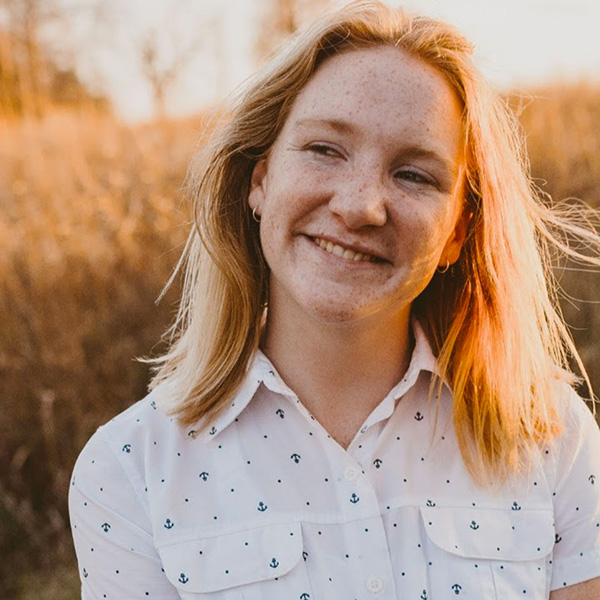
Story by Logan Jackson
When Mairi Beranek transferred to the University of Missouri last fall, she immediately looked for opportunities to expand her fluency in the Arabic language. Beranek minored in Arabic Language and Literature at the United States Air Force Academy before becoming a Tiger, and her research led her to the Boren Awards.
The Boren Awards fund language-focused study abroad in areas of the world that are critical to U.S. interests and underrepresented in study abroad. The program gives undergraduate and graduate students the opportunity to pursue a wide range of critical languages, including Arabic, Mandarin Chinese, Portuguese, Russian or Swahili.
“I was certainly ecstatic to receive the scholarship, but my initial reaction was honestly surprise,” said Beranek, a senior Criminal and Justice Studies major. “I am very excited to have the opportunity to study abroad and increase my fluency in the language.”
Beranek will study in Morocco this fall, where she will have the opportunity to fully immerse herself in the language and culture. She will study Modern Standard Arabic (MSA) through her courses and learn the specific Moroccan dialect, Darija, through conversations with locals.
“Mairi is notable not only for her intellectual curiosity but also for her initiative,” said Elizabeth Taylor, a doctoral candidate in the Mizzou School of Social Work and an adjunct instructor. “She seeks out opportunities beyond required coursework to broaden her understanding and develop her skills. Mairi articulates clearly how her background — shaped by military experience, leadership in community organizations, and sustained engagement in teaching and learning environments — has cultivated the skills and resilience required for successful language immersion.”
This will be Beranek’s first study abroad experience. While the opportunity will help her build her language skills, it will also allow her to continue to develop analytical and interpersonal expertise that she will eventually use toward a career in criminal investigation and behavioral analysis.
“When I was working on the application throughout the fall semester, a thought that was forefront in my mind was, ‘I could be living in a different country at this time next year,’” Beranek said. “It will certainly be something to be adjusted to, but one thing I am most excited about is learning how to cook the local cuisine. I am also excited to see the historic sights nearby and learn how to dress according to the religious and cultural customs of the area. I would call all these things among the most important opportunities because learning the language is understanding what they are saying, but immersion helps you understand why they are saying what they are saying. Immersion also requires you to figure out how to communicate in the language instead of just slipping back into a more comfortable language because, unlike instructors in a school setting, they may not understand your native language.”
This story originally appeared on the Mizzou Office of Global and National Fellowships website.