Feb. 18, 2026
Story by Cheri Ghan, ghanc@health.missouri.edu
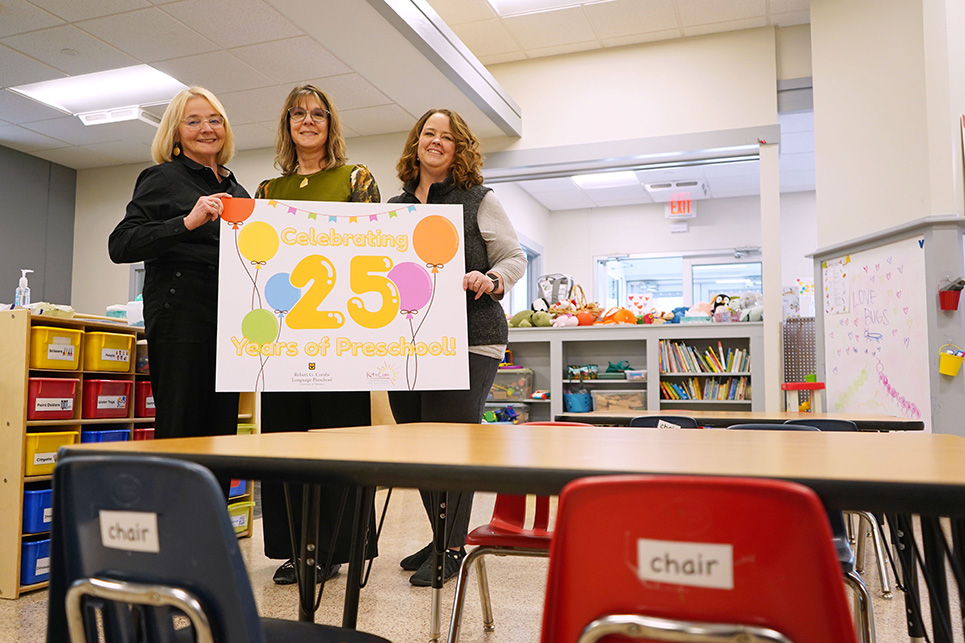
For 25 years, the Robert G. Combs Language Preschool has provided outstanding service to 835 children with speech and language delays while offering exceptional clinical education to 1,400 Mizzou Speech, Language and Hearing Sciences students. The program’s success stems from a vision sparked decades ago by a leader who initially didn’t want the job.
Dana Fritz, who is now director of undergraduate studies and a clinical professor in the SLHS department, said she initially turned down the preschool director role at least three times.
“I really didn’t think I’d like the job,” Fritz said. “When I was going to get my first client as an undergrad at Mizzou, I pleaded with them not to give me a kid. And of course, they gave me a kid. A little preschooler who stuttered. And I loved him. Why would I think I wouldn’t like running the preschool? I guess I’m just the type of person who has to say ‘No, not me’ before really thinking about it.”
Despite any initial hesitations, Fritz ultimately accepted the challenge of starting this one-of-a-kind preschool within the College of Health Sciences in 2000. After serving as its director for a dozen years, Fritz now refers to it as her favorite job of all time.
Early beginnings
The Combs Language Preschool is named for Robert G. Combs, an engineering professor who developed an interest in child communication disorders in 1965. After studying the issue for 30 years, Combs proposed a plan to launch a preschool that would fund and provide treatment for children.
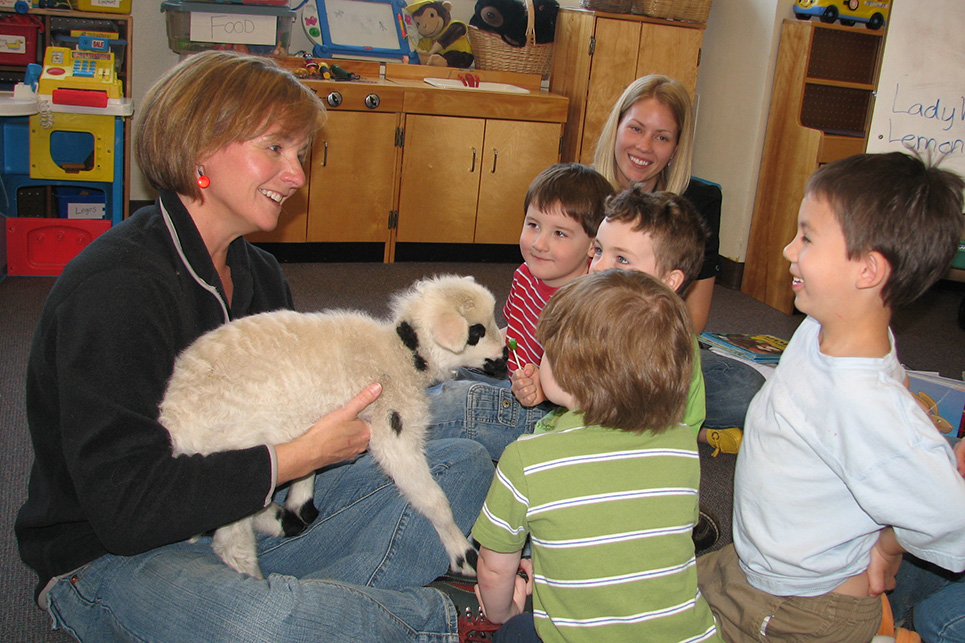
On the heels of a successful trial program in the MU Speech and Hearing Clinic by clinic director Barbara Brinkman, the preschool officially opened in September 2000 with Dana Fritz at the helm. Housed in 124 Clark Hall, the preschool initially had four or five preschoolers and four student clinicians in each of its two classes.
The initial space was small, Fritz said, and had previously served as a “dorm mother’s” apartment before becoming an audiology suite for the Department of Speech, Language and Hearing Sciences. After tearing down the audiology booth and moving it to the second floor of Lewis Hall, Fritz said it was time for some elbow grease.
“I cleaned up the rooms and tried to make it look like a preschool on a shoestring budget, using a lot of stuff from my home,” she said.
The preschool received financial support from the Columbia Valley Scottish Rite, and a sliding fee scale helped families with expenses. Children enrolled through referrals from doctors and other providers, and classes often included a typically developing child as a peer role model.
“Many kids fall through the cracks in terms of not qualifying for services at a time when they really could benefit from intensive, intentional speech and language intervention — when their brains are fully ‘plastic’ and developing,” Fritz said. “We had Mizzou students who were eager for practical, hands-on experience and kids who maybe did not qualify for Early Childhood Special Education or other services but were below age expectancy for speech and/or language skills.”
Building momentum
The initial goal of the preschool was twofold: In addition to helping families navigate a variety of communication issues, it was designed to train the next generation of speech-language pathologists.
Student clinicians took turns planning the curriculum based on weekly themes. Karen Hecksel Nygaard, BHS-CSD ’10, MHS ’12, was a preschool student clinician for two semesters during her senior year. She said the experience helped build her creativity and skills as a student clinician.
“I knew I would be working with kids in the MU Speech Language and Hearing clinic in grad school, so I wanted to start trying to apply what we were learning in the classroom,” Hecksel Nygaard said. “The most challenging part for me was learning the best way to engage with young kids and incorporate the skills they were working on into play-based activities.”
The student clinicians flourished in the new setting. Hecksel Nygaard said she experienced plenty of “aha” moments while working in the preschool.
“If you want to be a good teacher, you’re always trying to make concepts meaningful or sticky,” Fritz said. “The preschool really helped a lot of undergraduates understand what their academic teachers were trying to help them learn through research articles, textbooks and videos.”
The student clinicians also used their own networks to bring preschool lessons to life: Some managed to convince friends to pitch in by bringing equipment like city firetrucks and giant tractors to Lewis and Clark halls.
“Our kids were just vibrating with excitement when that kind of stuff pulled up, desperately trying to talk to the guys behind the wheel and win them over,” Fritz said. “I loved seeing that.”
Passing the torch
Throughout countless teachable moments, the preschool continued to garner attention and interest from families in the area. By 2012, each of its two classes had up to 10 students enrolled.
The combination of increased enrollment and an expanded teaching load for Fritz became too much to juggle, so she made the difficult decision to step away from the job. Greta Hull, a supervisor in the MU Speech and Hearing Clinic and SLP for Early Childhood Special Education in Jefferson City, stepped in as the preschool’s second director.
Hull saw a substantial community need for communication services for children under the age of 3, so she added a toddler room to the preschool’s offerings. Hull was also instrumental in launching an inclusive adaptive playground outside of Lewis and Clark halls, working in conjunction with Dean Kristofer Hagglund and the CHS advancement team to find donors willing to make that vision a reality.
“This gave the Combs preschoolers accessible playground equipment to enjoy that allows the student clinicians to apply therapeutic techniques outside a clinic room,” Hull said. “It also offers interdisciplinary opportunities in a fun and interactive environment.”
Hull said she appreciated the daily opportunity to watch preschoolers grow in their ability to interact and communicate. When Hull left to care for a family member, MU Speech and Hearing Clinic supervisor Christi Baker became the third director of the preschool in January 2020.
“My number one goal was to maintain the integrity and high quality of the program that had been established by my predecessors,” Baker said. “However, COVID had other plans for me!”
Baker took over in the preschool’s original small location, but she needed additional space to bring children back during the COVID-19 pandemic. She didn’t have to look far: The pandemic had closed the College of Health Sciences’ adult day care program, and its larger space in 137 Clark Hall allowed the preschool to resume operations in fall 2020.
“We were one of the very few university programs to open their preschool programs so soon after the pandemic began,” Baker said. “With masks and plexiglass barriers on tables, lots of outside time and extremely motivated student clinicians, we did it.”
While it wasn’t ideal to conduct speech therapy in masks, Baker said the curriculum would not translate well to online learning. She also felt that simply not having the preschool available to families who depended on its services — and student clinicians who needed hands-on training — didn’t feel like a viable option.
“The children needed social engagement, and the college students didn’t have years to wait and see if next semester would be better for them to take this course, so we just put our heads down and plowed forward,” she said. “I’d say we are all better clinicians because of the trials and tribulations of that experience.”
A bright future
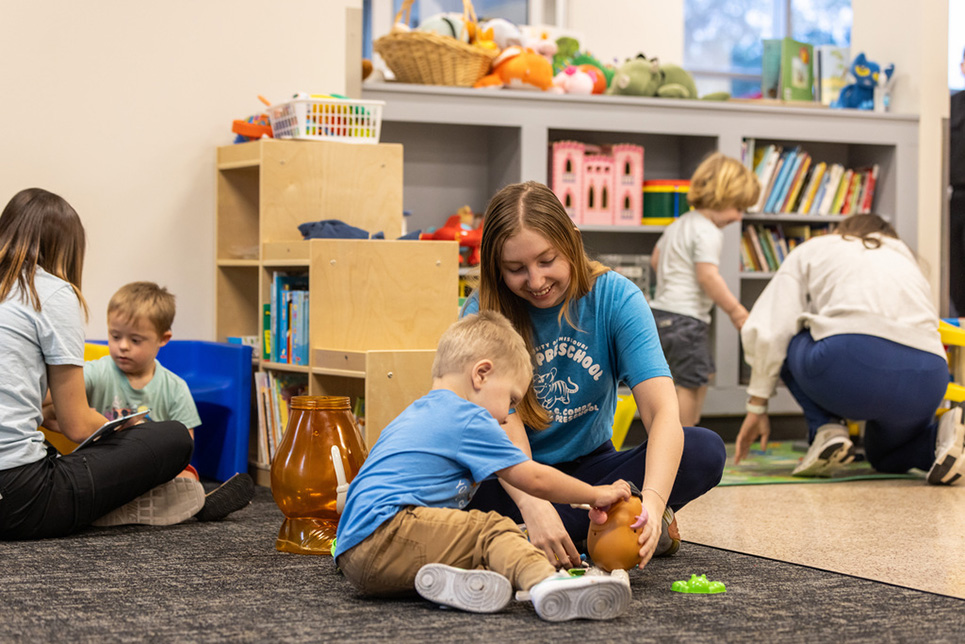
As part of a multimillion-dollar renovation project in Clark Hall, 137 Clark became the preschool’s permanent home.
In the five years since Baker took over as director, the preschool has grown to serve 31 children per semester and expanded its team to include 12 senior undergraduates and 20 graduate student clinicians. It also added weekly physical and occupational therapy, an inclusive playground for children of all abilities, a special feeding group called Project Little Bites and a certified therapy dog named Kelce.
Hecksel Nygaard, who now works as a speech-language pathologist in St. Louis hospitals, said her time in the preschool showed her that therapy can be fun and effective without a rigid structure.
“I learned a great deal about play-based therapy and speech/language strategies to use when working with young children,” she said. “While I did not end up working with children in my career, I have found myself using some of the strategies I learned in the preschool with my own preschool-aged daughter.”
Baker has more ideas for a bright future for the preschool, including growing current programs and bringing back favorites like guest readers. Like Fritz, she loves her job in the preschool.
“Dana and Greta really laid the groundwork for this wonderful program, and I am just honored to be continuing on with the tradition of excellence,” Baker said. “Plus, I get to laugh daily — and that is priceless!”