May 11, 2026
Story by Ryan Gauthier, rjgauthier@health.missouri.edu
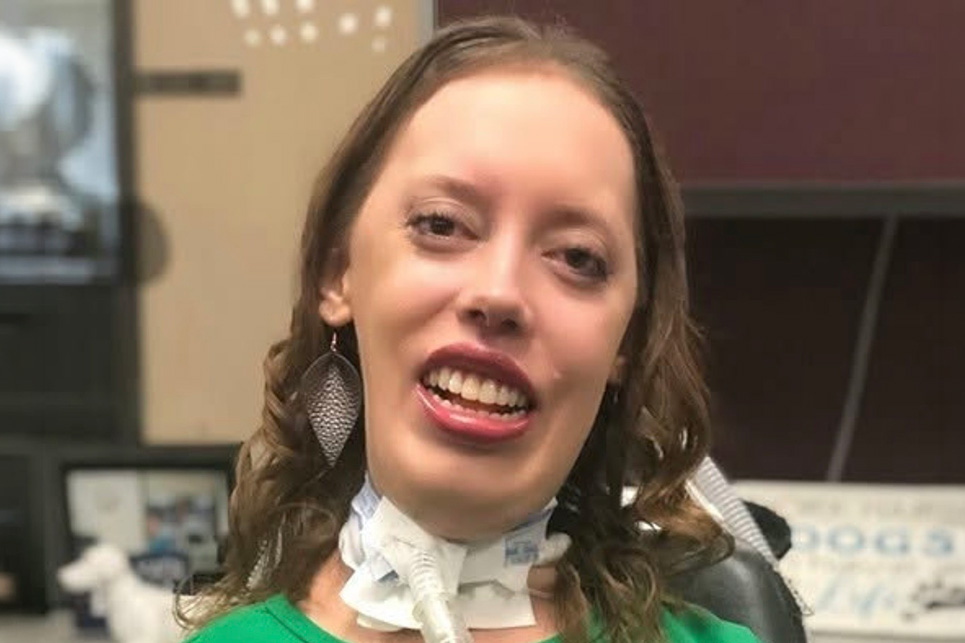
Caitlin Bartley believed life is inseparable from risk.
This concept shaped her scholarship, advocacy and daily life as a doctoral student at the Mizzou School of Social Work, where her research on the “dignity of risk” shaped conversations about disability, autonomy and choice.
Bartley will be awarded her PhD posthumously during the College of Health Sciences commencement ceremony Saturday, May 16, in Jesse Auditorium. She died in March after complications tied to lifelong congenital medical conditions, just weeks before completing a degree she had worked toward for years.
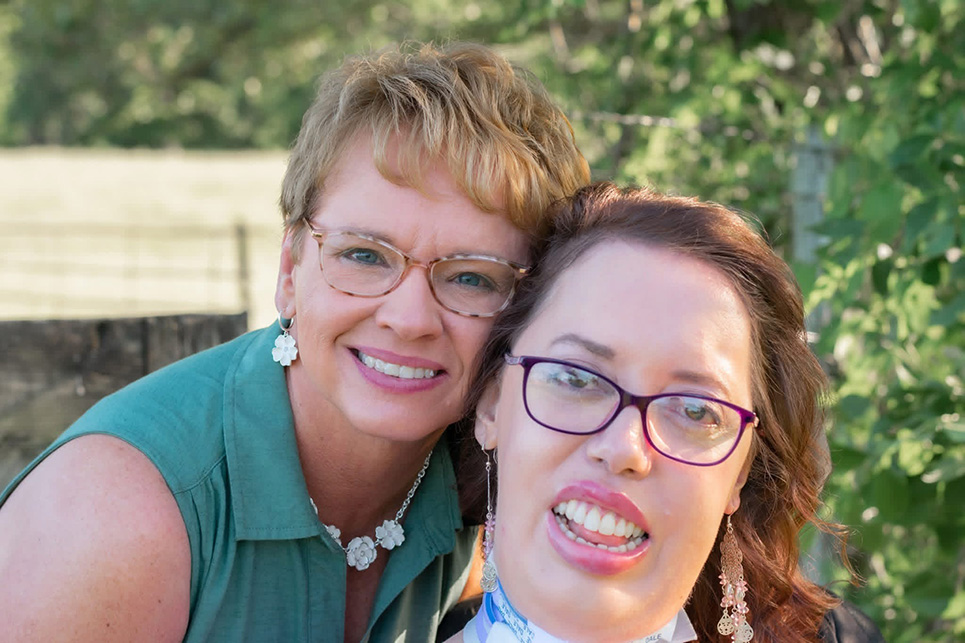
Her mother, Beth Melton, said the recognition reflects not only Bartley’s academic achievements but also the values that guided her life well before graduate school.
“She was a very caring individual, and she was very witty,” Melton said. “She kept us on our toes with her wit. She had a strong love for her family. She was just a beautiful soul.”
Choosing possibility
From early childhood, Bartley and her family pushed back against assumptions about what her life might look like. Doctors once advised Melton not to focus on long-term therapies because they were unsure how long Bartley would live. Instead, Melton chose to emphasize possibilities.
“I always told her we can do the same thing anybody else can do — we just have to do it a little bit differently,” Melton said. “I may have started that determination, but then she took it and ran.”
By second grade, Bartley was already advocating for herself. She asked to speak to her classmates to explain her wheelchair and answer questions so she could simply be another student afterward. As a teenager, she insisted on being included in major medical decisions about her care. Long before encountering the term academically, Melton said her daughter was practicing dignity of risk.
Scholarship with purpose
That principle later became the foundation of her scholarship at Mizzou. As a graduate student in social work, Bartley focused her research on how dignity of risk applies to people with intellectual and developmental disabilities, examining how systems balance safety with autonomy and informed choice.
Clark Peters, an associate professor in the School of Social Work, served as Bartley’s dissertation chair. He said her research focus resonated far beyond a single discipline.
“It isn’t just a matter of rights,” Peters said. “This is recognizing an individual as inherently having some dignity. And along with exercising and expressing that dignity is some risk taking.”
From theory to impact
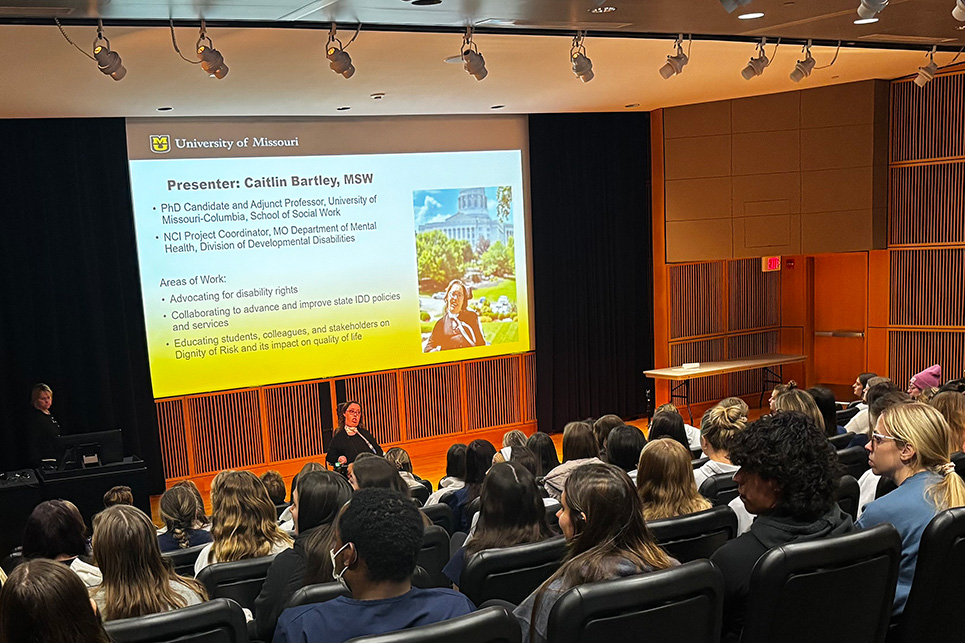
Bartley applied the concept across fields, including child welfare, disability services and physical and occupational therapy. She worked full time for the state of Missouri while completing her doctorate, administering large-scale surveys and building partnerships across sectors. Peters said she was “inches away from finishing her dissertation” when she died.
“What she accomplished in her short life is remarkable,” Peters said. “There are able-bodied, very smart people who do not finish their dissertation because it’s hard work.”
Melton said Bartley was driven by a desire to ensure her work had real-world impact.
“She wanted to know that this work was making a difference, that she could help change the world,” Melton said.
Bartley presented her research nationally and internationally, taught online courses and guest lectured across campus. Peters later presented their shared work on dignity of risk at an international conference, where he said audiences immediately recognized its relevance.
“She was such a generous spirit,” Peters said. “As much as she was excited about her ideas, she also wanted to share what she was learning.”
Lasting legacy
In recognition of these contributions, faculty and leadership at Mizzou moved forward with awarding Bartley’s degree posthumously. Meanwhile, Peters continues to develop her research and encourage its application across additional health professions.
For Melton, the degree represents both pride and a reminder of the future Bartley was building.
“She had worked so hard on it,” Melton said. “This was the culmination of all her hard work. It meant everything.”
Outside of academia, Bartley enjoyed spending time with family and friends as well as listening to music. Melton said her daughter had a gift for remembering what mattered to people and turning that into shared experiences.
“She was one of the best gift givers you will ever meet,” Melton said. “You could say something just in passing, like, ‘I like that,’ and the next holiday you would get that.”
Bartley often surprised her parents with tickets to concerts or St. Louis Cardinals games, experiences Melton said mattered more to her daughter than recognition.
As Bartley’s work continues through the university and the state of Missouri, her influence remains tied to the idea she spent years refining: that protecting people from risk should never come at the cost of their agency. “She wanted people to understand,” Melton said, “that choice makes a difference in quality of life.”