July 27, 2026
Story by Ryan Gauthier, rjgauthier@health.missouri.edu
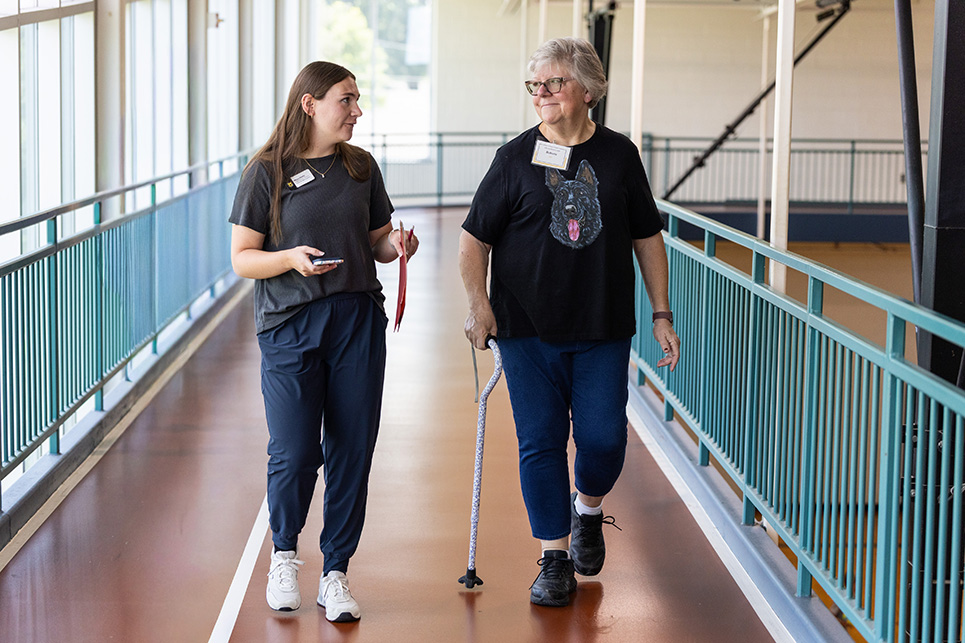
As Roberta Rynning walked laps around the indoor track at Columbia’s Activity & Recreation Center, Doctor of Physical Therapy student Maya Hartz kept pace with her, offering guidance and encouragement along the way.
For Rynning, who experienced a stroke two and a half years ago, what otherwise looked like a quick warm-up lap was another step toward building her strength, confidence and independence. Although she’s already a member of the recreation center, Rynning said Neuro Bootcamp offered a way to connect the progress she made in physical therapy with the active lifestyle she wants to maintain.
When Rynning saw a sign for Neuro Bootcamp while attending physical therapy sessions, she decided to give the free program a try.
“I thought, ‘Why not?’ ” Rynning said. “I figured this would be great and I could learn lots of things from them.”
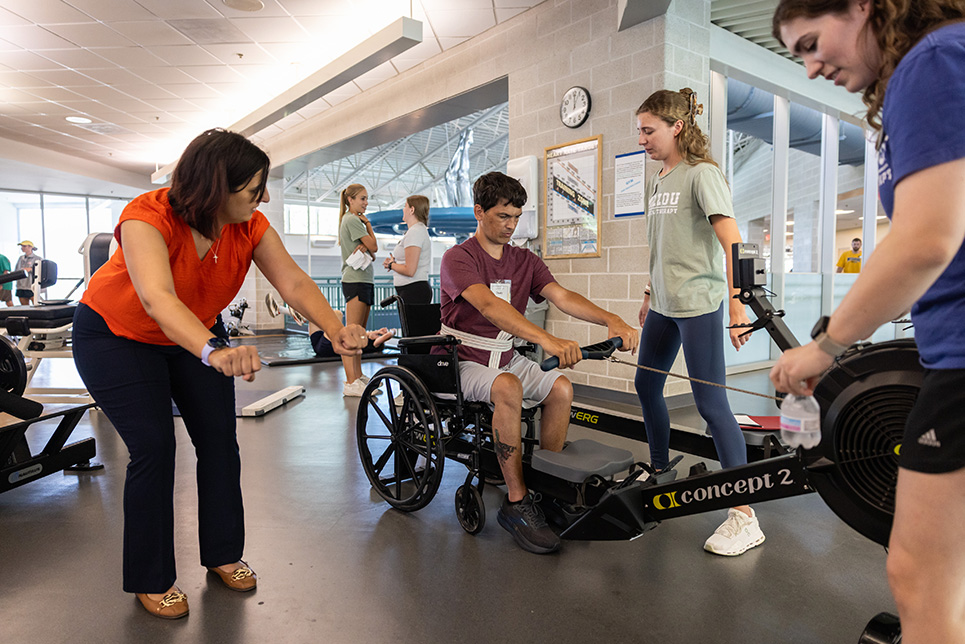
Neuro Bootcamp, a free program offered through the Department of Physical Therapy, helps adults with neurologic conditions transition from formal rehabilitation to lifelong healthy living. Participants with diagnoses such as Parkinson’s disease, stroke, multiple sclerosis and brain injury learn how to exercise safely and effectively through activities tailored to their abilities.
“It’s a wellness bridge program,” said Anita Campbell, a teaching professor in the Department of Physical Therapy. “It is intended to help fill the gap for our community members between what is structured therapy and what is lifelong healthy living.”
Research has shown that regular exercise can improve quality of life, mental health and overall physical health for people living with neurologic conditions, Campbell said. The right kinds of exercise can also support nervous system recovery or help slow disease progression.
Rynning said one of the program’s greatest benefits has been learning exercises she can continue long after the class ends.
“I was looking for some way to get stronger and also to not feel so scared of falling,” she said.
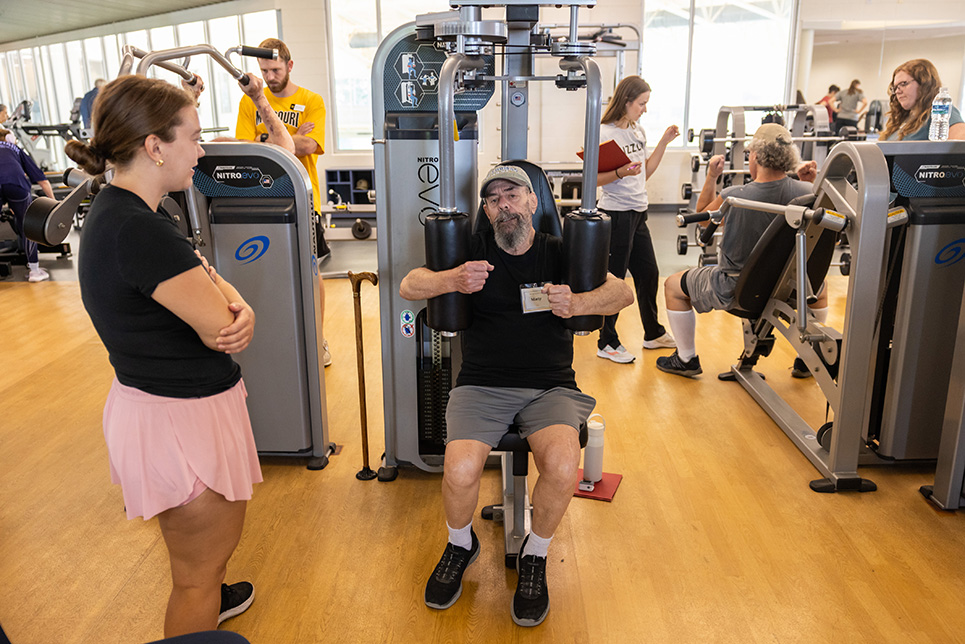
Marty Kossak, who lives with Parkinson’s disease, said Neuro Bootcamp helped him rediscover his motivation to exercise after fatigue and other symptoms made staying active more difficult.
“This class, one, I think it’s the best decision I’ve made in a long time,” Kossak said. “It’s not only been a very good decision, but I think it’s reoriented me toward getting exercise and sort of fighting my Parkinson’s.”
The program’s benefits extend beyond community participants, though. Doctor of Physical Therapy students work directly with participants throughout the eight-session program, gaining experience adapting exercises and wellness strategies for people with a wide range of abilities and diagnoses.
That hands-on learning helps prepare students for future clinical practice while providing participants with individualized support and encouragement.
“The idea of Neuro Bootcamp is to empower people to know how to continue to exercise in ways that are really beneficial,” Campbell said.