September 9, 2026
This is part of a series of Q&As introducing faculty who have joined the College of Health Sciences for the 2026–27 academic year. Meet all of our new faculty members.
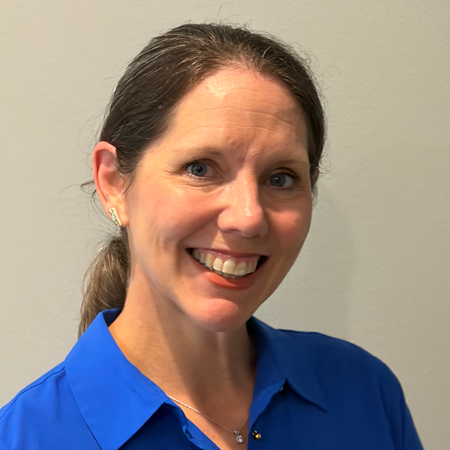
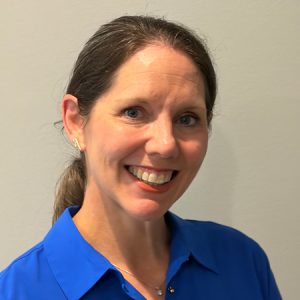
Leslie Hawley
Associate teaching professor, Public Health
What classes are you teaching this semester?
I am not teaching classes this semester, but I will begin teaching in spring 2027.
Tell us a bit about yourself and your background.
I am originally from El Paso, Texas (Go Miners!), and earned my doctorate in educational psychology, with a specialization in quantitative, qualitative and psychometric methods, from the University of Nebraska-Lincoln.
Throughout my career, my work has been guided by questions such as: How do we know whether programs are effective? How do we measure meaningful outcomes? How do we use data to improve systems? I have used these questions to help programs and practitioners learn, adapt and drive change across education, philanthropy and public health.
What drew you to your field — and what brought you to Mizzou?
As a high school teacher in Texas, I witnessed firsthand how standardized tests were used to drive decisions and evaluate school performance. I was both frustrated and fascinated by this process, which led me to pursue graduate study focused on the science of testing, measurement and evaluation. My teaching experience ultimately launched me into a career I didn’t realize existed.
I continue to draw on the challenges I experienced as a practitioner within a larger system to shape how I talk about and demystify data, as well as my approach to collaborative, evidence-based decision-making.
For the past eight years, I have worked outside the classroom on projects in philanthropy, public health, applied research and evaluation. I am excited to join Mizzou and return to the classroom. I love working with others to help them achieve their goals, whether that means helping a student understand a tricky statistical concept or assisting a faculty member in measuring a learning outcome.
What are your research or professional interests?
My work is guided by an interest in measurement questions, such as “What does success look like and how should we measure it?”; program evaluation, such as “Did our program or intervention change outcomes?”; and continuous improvement, such as “What is working, and what can be improved?”
These questions will be woven throughout my courses, regardless of the subject matter, to encourage evidence-based thinking and decision-making. I will also draw on these concepts to guide accreditation and program evaluation activities for the Department of Public Health.
What do you enjoy most about your job?
I love working with students and faculty to accomplish their goals. I also find it rewarding when I can make data and evaluation more accessible and meaningful to a variety of audiences.
What are you looking forward to this semester?
I look forward to meeting students and faculty, learning more about the department, diving into accreditation and curriculum data, and preparing for my spring courses.
What can students expect from your classes?
Regardless of the topic, students can expect to work with data and data analysis software in my classes. I believe working with and interpreting data helps bridge the gap between theory and practice, so I want to give students opportunities to develop and practice those skills.
Share a memorable moment from your time teaching.
When I was a new high school teacher, I sometimes struggled with classroom management. My mother and I taught at the same school, and I remember stepping into the hall to chat with her, only to return to a chaotic classroom.
I tried to restore order, but the students weren’t paying any attention. My mom walked into the room and, within 10 seconds, maybe less, had every student sitting quietly. I remember staring at her in awe right alongside my students because of the incredible presence she had in the classroom.
Thankfully, I’ve never had a chaotic situation like that in my college classrooms where I needed saving!
What’s one fun hobby or activity you enjoy outside of work?
I love to read and try to visit independent bookstores whenever I travel to a new city. I am always open to talking about books and getting new recommendations.
What is your hidden talent?
I played Division I college golf, and my lowest 18-hole score is 66.
Favorite place in Columbia so far?
I enjoy taking art classes at the Columbia Art League and visiting either Daniel Boone Regional Library or Skylark Bookshop.
What is the best piece of advice you’ve ever received, and who gave it to you?
My father and high school golf coach have both given me advice along the lines of: “Don’t let perfect be the enemy of good.”