August 27, 2026
Story by Ryan Gauthier, rjgauthier@health.missouri.edu
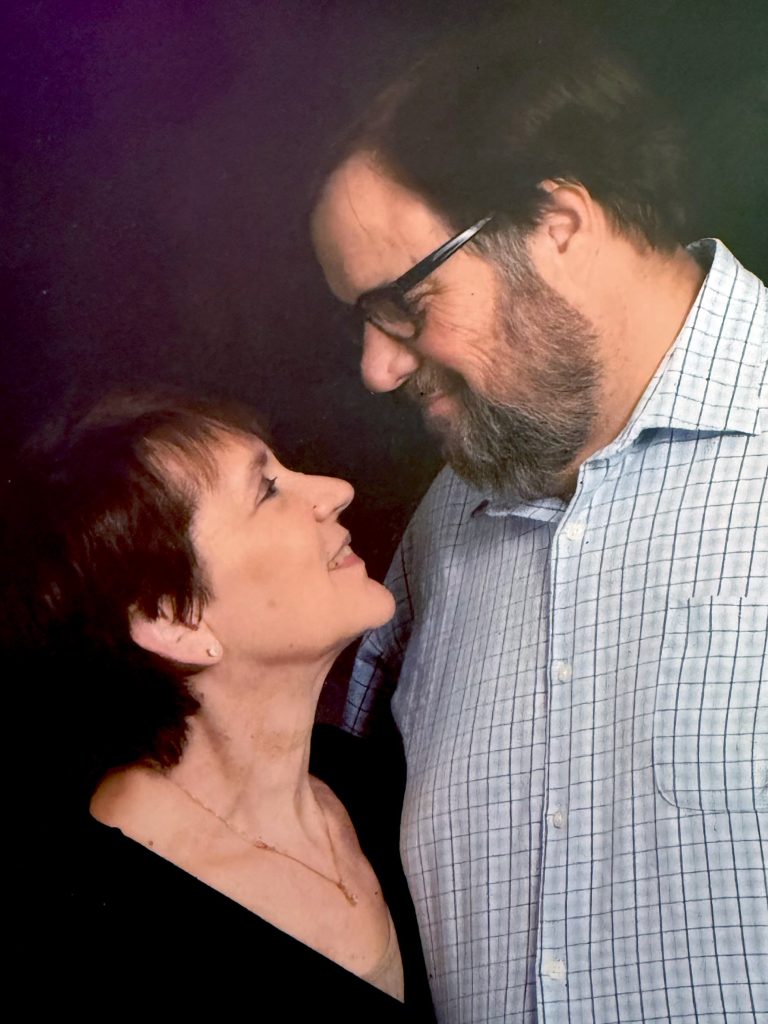
Ask Dennis Dipietre about gratitude, and he’ll tell you it’s not meant to fade as a chapter closes. Gratitude should be practiced, lived out and tangibly extended to others.
This belief is at the core of the newly established Dunnaway, Hansen, Wheeler Therapy Services Scholarships in the University of Missouri College of Health Sciences. Created by Dennis and his late wife, Susan, the scholarships will support students in the departments of physical therapy, occupational therapy and speech, language and hearing sciences — the first scholarship designed to serve students in three different departments within the college.
The scholarships are named for three therapists whose care profoundly shaped the DiPietres’ experience during Susan’s illness.
“We developed a very deep and strong, caring relationship,” Dennis said. “It was therapeutic for Susan and for me.”
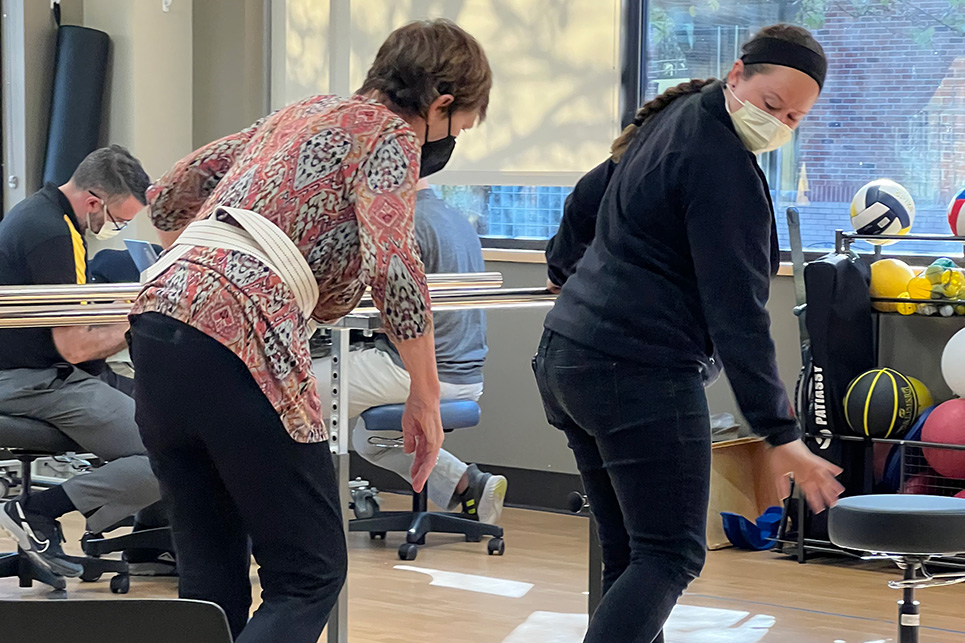
Susan lived with an atypical, aggressive form of Parkinson’s disease and received care for several years through Rusk Rehabilitation Hospital. She worked closely with physical therapist Jessica Hansen, occupational therapist Shawna Dunnaway and speech-language pathologist Michelle Wheeler. Dunnaway and Wheeler are graduates of the College of Health Sciences. Hansen, though not a Mizzou alum, was equally central to Susan’s care and to the DiPietres’ decision to honor the three therapists.
Each scholarship reflects qualities Dennis saw firsthand: compassion paired with challenge in physical therapy, creativity and problem‑solving in occupational therapy and deep human connection through communication in speech therapy. Recipients will be selected by their respective departments based on both skill and character.
What set Hansen, Wheeler and Dunnaway apart, Dennis said, was how they approached their health professions.
“It was clear to me that these women didn’t have jobs,” he said. “They had callings. A job is something that takes time and produces income. A calling is a response of the person to the call of another person.”
Their compassionate care mattered as the DiPietres navigated neurological rehabilitation, where progress can be limited and loss is common. Dennis said therapists who work with neurological patients often face long arcs of decline rather than recovery.
“To be motivated in that kind of an environment, to do what they do, you just don’t see it very often,” he said.
The therapists challenged Susan when needed and encouraged her when she faltered. And they never reduced her to a diagnosis. Dennis said there were meaningful moments when therapy sessions paused entirely so the focus could shift to emotional support.
“The way they were able to leave the agenda of the day and comfort us was just incredible,” he said. “They were always present to us as persons.”
As Susan’s condition progressed, the relationship with the therapy team extended beyond the clinic. They shared meals, stories and everyday moments. Over time, they became something closer to family.
“I could literally have any one of them over to the house for supper with their families and feel like it was a relative,” Dennis said.
The idea for the scholarships grew naturally from that experience. Trained as an economist, Dennis framed the decision in practical terms.
“If you want more of something, you subsidize it,” he said. “So the idea of the scholarships, if you want more people like this, make it a little more affordable for students, and then you’ll have them.”
Each scholarship reflects qualities Dennis saw firsthand: compassion paired with challenge in physical therapy, creativity and problem‑solving in occupational therapy and deep human connection through communication in speech therapy. Recipients will be selected by their respective departments based on both skill and character.
Rather than naming the scholarships after himself or Susan, Dennis wanted the therapists’ names to be visible and enduring.
“I really wanted to honor them,” he said. “So that they could be proud to come into work and know that somebody recognized, in a lasting kind of way, the multiple layers of healing, body and spirit which they provide.”
Read about other Tigers working to Power the Roar at Mizzou.