April 23, 2026
Story by Ryan Gauthier, rjgauthier@health.missouri.edu
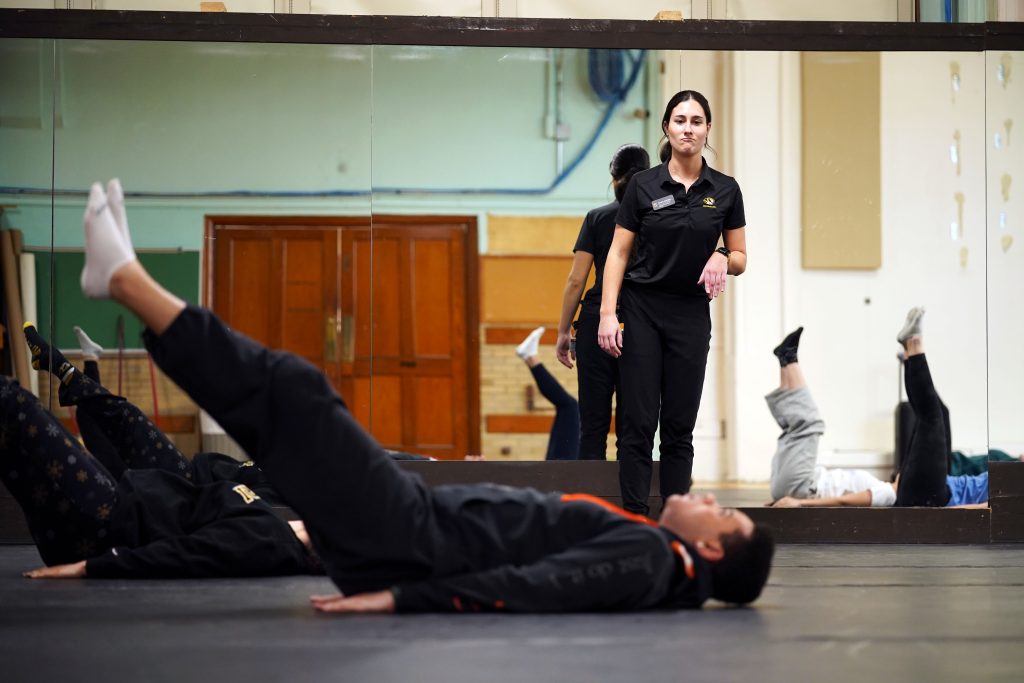
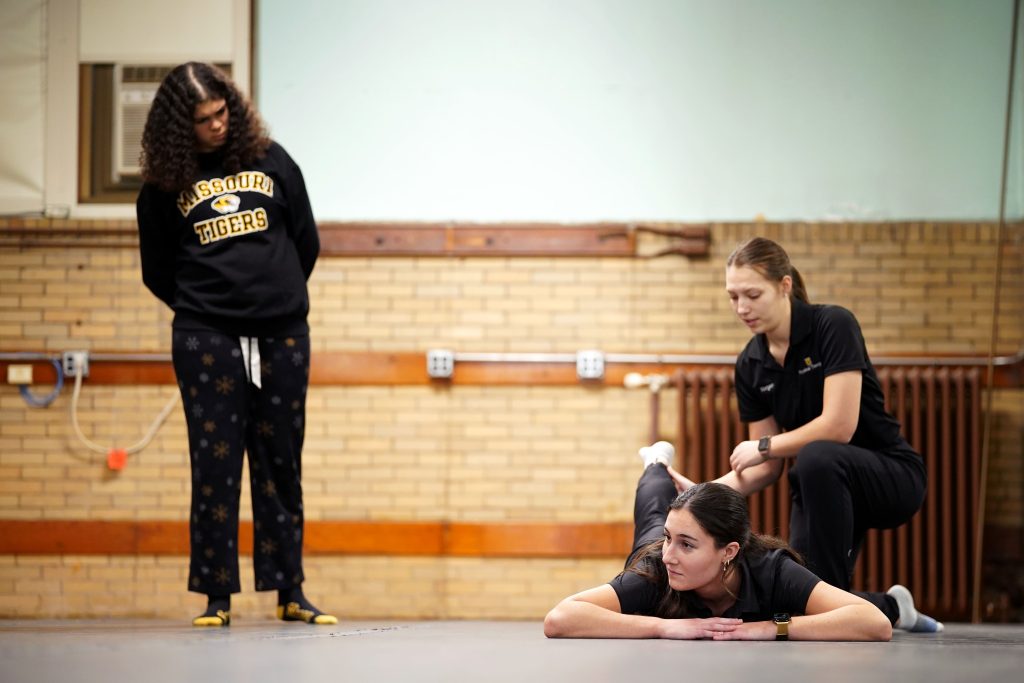
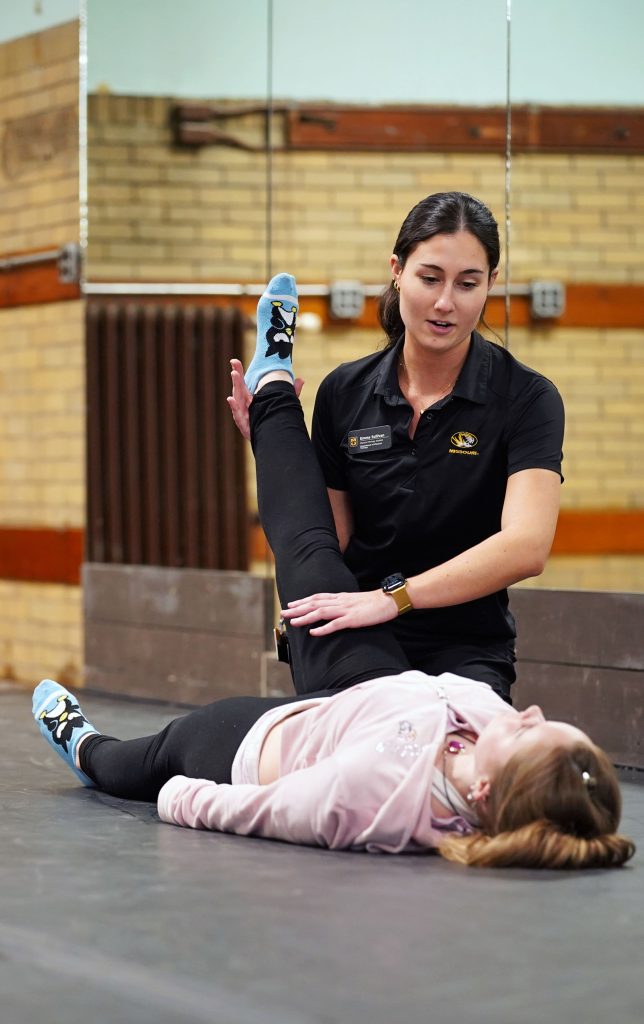
On a cool spring morning, Doctor of Physical Therapy students Emma Sullivan and Morgan Hartley weren’t in a clinic or lab. They were in a dance studio, breaking down pliés, leg extensions and jump landings for a room of undergraduate dancers and offering them a unique perspective on movement.
The session grew out of a collaboration between the College of Health Sciences’ Department of Physical Therapy and the College of Arts and Science’s Department of Theatre and Performance Studies. Sullivan and Hartley were able to apply clinical reasoning in a setting where movement, technique and repetition are the focus.
Sullivan and Hartley both have backgrounds in dance, so it was a chance to pair their roots with a fresh perspective from PT school.
Sullivan, a third-year PT student, had helped with a similar presentation the previous year and was eager to return. Hartley, who is in her first year of PT school, has been dancing since she was 4 years old and continues to perform with the Mizzou Club Dance recreational team.
“This seemed like a fun opportunity to share my love of dance with others but also educate about what physical therapy is and how important body mechanics are to prevent injury,” she said.
The cross-campus collaboration was facilitated by Kelly Stephens, a teaching professor with the Department of Physical Therapy, who connected the PT students with Emily Ehling, an assistant teaching professor in the Department of Theatre and Performance Studies.
“Many students who enroll in Introduction to Dance take the course as a way to be active while increasing their strength, mobility and coordination,” Ehling said. “Information directly from the physical therapy field helps my students understand their bodies more deeply not just for dance class, but for the rest of their lives.”
Rather than delivering a traditional lecture, Sullivan and Hartley focused on how physical therapists evaluate movement. They encouraged dancers to consider where movement originates, how alignment and core control support performance and how small changes in mechanics can reduce injury risk.
“It was a great reminder that our role is often to empower people with tools and awareness that help them move better and stay healthy long-term,” Sullivan said. “[We] encouraged them to start thinking about their bodies the way a physical therapist might.”
Hartley emphasized how the body adapts to meet movement demands — and how those adaptations can become problematic over time.
“Our body is great at adapting to accomplish the movements we desire, but over time those compensations can lead to pain or injury,” she said. “We want them to appreciate technique, so they can prevent injury and be lifelong dancers.”
The session concluded with movement. Hartley choreographed a short combination for the class, allowing the dancers to apply physical therapy principles as they performed. Sullivan and Hartley joined the class, turning the session into a shared learning moment.
“It was so fun to dance with a group of college students who truly seemed happy to be there,” Sullivan said. “The students were so engaged and made the presentation great.”
For Sullivan and Hartley, the dance studio offered a unique setting for honing their clinical expertise. With movement serving as both the subject and the outcome, the collaboration allowed them to apply classroom knowledge in real time.