April 16, 2026
Story by Ryan Gauthier, rjgauthier@health.missouri.edu
When Bea Davisson set out to honor her parents’ legacy, she created an opportunity that will advance research and training in the Mizzou College of Health Sciences.
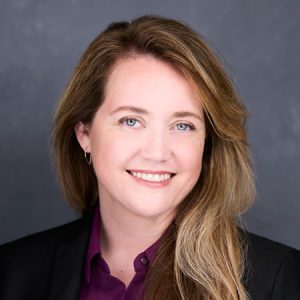
Teresa Pitts, professor and chair of the Department of Speech, Language and Hearing Sciences, has been named the inaugural Ora B., Charles N. and Beatrice L. Davisson Faculty Scholar. This three-year appointment will strengthen the department’s research mission and support faculty leadership in advancing the field.
The Davisson Faculty Scholar position was made possible through the generosity of Bea Davisson, whose estate gift and annual contributions will create a lasting impact on scientific discovery. Bea, a 1974 graduate of Mizzou’s marketing program, established the fund to honor her parents, Ora and Charles Davisson. The family has deep ties to Mizzou: Ora earned her bachelor’s and master’s degrees in speech-language pathology at the university and later taught courses while pursuing her doctorate; Charles was a faculty member in the Robert J. Trulaske, Sr. College of Business.
“This kind of gift creates a legacy in the scientific record,” Pitts said. “Every presentation, abstract and publication that comes from this work will carry that name. That legacy of support is what science needs for discovery.”
The new position reflects the department’s commitment to research and innovation. It will help faculty pursue groundbreaking studies and mentor the next generation of scientists.
“These big breakthroughs — new drugs, new treatments, new diagnoses — are the result of careers spanning many people and years,” Pitts explained. “To celebrate someone who is willing to provide long-term support for science they believe in is truly special.”
The Davisson family’s impact doesn’t stop there. They have also funded small departmental grants to support trainee research, with the first grant cycle launching this spring. These investments will help attract and develop talent at every level, Pitts said.
“We want trainees at every stage: undergraduates, master’s students, PhD students, postdoctoral fellows,” she said. “We want the full scaffolding of an academic career. And we want discovery. We want people excited about their work, presenting nationally and building a reputation that we train good people who go on to do impactful work for our fields and for the patients we serve.”
This appointment marks an important step in the department’s evolution from a primarily teaching-focused unit to a research-driven leader in the field. It also underscores the importance of sustained investment in research and training, Pitts said.
“Americans want foundational discoveries in health care, but we can’t stop supporting them,” she said. “If training grants go away, you get gaps. For as long as that gap lasts, you lose years of scientists who could have made discoveries. This kind of support is critical.”
Read about other Tigers working to Power the Roar at Mizzou.