September 23, 2026
This is part of a series of Q&As spotlighting faculty members within the College of Health Sciences who are involved in research. Learn more about research happening at Mizzou.
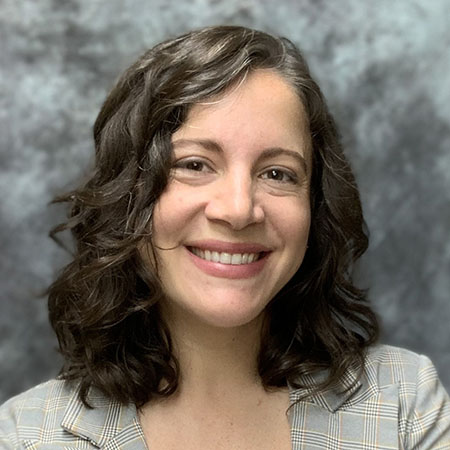
Caroline Larson
Title: Assistant Professor
Department: Speech, Language and Hearing Sciences
How would you describe your research to someone who knows nothing about it?
My research seeks to understand why some individuals struggle to learn language while most people learn language effortlessly. We test how language and other cognitive abilities, like attention and working memory, interact to cause some of these difficulties in children and adults with developmental language disorder and autism. Our long-term goal is to improve clinical care and quality of life for these individuals.
What have you recently discovered that surprises or excites you the most?
The importance of visual cognition to language! For the SHAPE project, my group and colleagues are studying word learning in toddlers at elevated likelihood of having developmental language disorder and autism spectrum disorder. We are learning that an early understanding of the visual properties of objects helps kids learn new words. We hope to continue learning about how we might leverage visual skills and cues to help these groups learn new words more quickly and deeply.
What challenges are you working to solve that others might not be paying enough attention to?
Developmental language disorder is a lifelong neurodevelopmental condition that is more prevalent than autism and has a lot of overlap with autism and dyslexia, yet few people have ever heard of it. Part of the challenge is that there is a long history of brain-based evidence on autism and dyslexia, but nearly nothing on developmental language disorder. My lab is working on mapping language in the brain to better understand the brain basis of developmental language disorder; we hope to address this significant gap in how we treat developmental language disorder versus other lifelong neurodevelopmental conditions.